An interview with actress Kathryn Prescott on her new short film, “Dear You”, which addresses the opioid epidemic.
She never imagined her father not being there, had never questioned his authority, but his illness made him less imposing. She had grown out of his shadow. Still, she surprised herself at how easy the truth came.
She’s saying something else, but I’m out of reasonable earshot, so it’s socially acceptable to pretend I don’t hear her now. It just so happens I did forget something, not capers, but a sauce for my spaghetti. I’m making dinner for Judy, my wife; she says I don’t surprise her enough. Tonight, I’m proving her wrong.
Revenge is one
of the first stories
my grandmother
read to me
when she warned my mother
I was a magnet for
impurities.
Jessica returned with Justin’s drink. Neither one of them noticed or seemed to care that Ruby was whimpering. I couldn’t wait to get out of that apartment, but knew that I had to repeat my instructions to Justin and Jessica.
I had a brother, an older brother,
who at ten years old was left at
the train station.
In front of a fireplace of mastodonic size
she stares at the shape she might create
but she finds difficulty solving this one
The riptide took a man today. You will find love.
I stood there yesterday, felt the muscle and teeth of water.
I still have bite marks.
I learned to cleave through the whirlwinds on his back
—unclaimed lacerations,
bullet holes gaping
on forsaken walls. Mercy
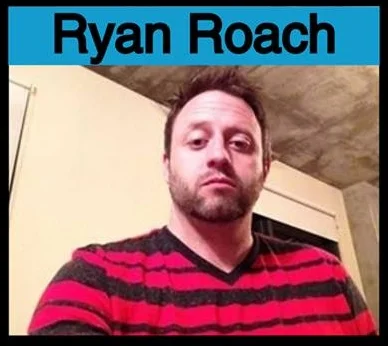
PODCASTOrdinary GraceRyan Roach
A podcast on spirituality & religion, hosted by the Founding Editor of Drunk Monkeys. This episode also features Ryan Roach, co-host of Drunk Monkeys Radio, talking about his Baptist upbringing, current atheism, and life in general.
Pam Jones’s Andermatt County: Two Parables revives the Southern Gothic tradition. The collection’s Ye Shall Be As Gods and Happy Birthday, Dear Bitsy are narrative and thematic polar opposites, but complement each other well. One follows a teenaged boy taken under a serial killer’s wing, while the other concerns a mother-daughter relationship and a doll-themed nightmare of a birthday party. Jones imbues her work with a certain charm, subtly mixing the beautiful with the horrific. Although some plot contrivances are not fully convincing, Jones’s period detail, idiosyncratic characters, and prose cadences envelop the reader’s senses. Flannery O’Connor would be proud.
The Filmcast crew takes a look at the surreal, disturbing Joaquin Phoenix film You Were Never Really Here. Also, a look at surreal films from Gus Van Sant and David Lynch.
In ordinary circumstances, it would be very hard to recommend a movie that only gets good after two full hours, and flirts with badness for much of its runtime. But this is no ordinary movie, and as you’ve already spent - I shit you not - 38 hours with this group of characters, you may as well suck it up and deal with some awkward pacing and jokes that don’t quite land. All of this glorious mess culminates in a stunning sequence in which the hoariest of comic book tropes is turned into a moment of rare cinematic beauty.
You really want to believe Angela Petitjean. Roz Nay’s debut novel Our Little Secret is has a strong Gillian Flynn vibe—except Angela is pretty likeable. She’s young and awkward and naïve and cornered by a seasoned detective. You believe she’s a good girl. And you really really don’t want to believe that she’s responsible for the disappearance of the woman who married her high school sweetheart. The deeper you dive into Angela’s story, the more you want her to have the happy ending she deserves. But no matter what you believe at the start, the ending will surprise you.
You Were Never Really Here, the latest film to call into question what exactly Joaquin Phoenix must be like at, say, a cocktail party, is an update of Taxi Driver for our own paranoid time. Phoenix, in a sentence I may as well just copy for future reference, inhabits his role with wounded humanity, creating a character who somehow stands apart from the other unpredictable loners he’s played before. There are many ways to tell this type of story, but only one of them, the approach director Lynne Ramsay takes here, delivers a film of such brutal grace.
VAST NECROHOL is unlike any book of poetry you have read. VAST NECROHOL is, perhaps, an Orcish death swamp. VAST NECROHOL is a story of “SINGKING” deep into the muck of a hostile culture and finding in it purpose, myth, and “LOAVE,” in spite of the fatalistic horror of never getting to be the hero in the “CUTSCEAN.” VAST NECROHOL gathers the gatekeeping jargon and infantile violence of the worst, toxically masculine parts of gamer culture and makes beautiful, faux-Chaucerian dialect poetry from it, much as our speaker “OPTIMIZES” her bone bra armor with the looted skulls of her enemies.
The Filmcast crew returns with a double bill of Soderbergh and Spielberg, as they review Unsane and Ready Player One and discuss conspiracy movies. Also, reviews of A Quiet Place and Paul the Apostle of Christ.
“Paloma” is fascinating both in style and content. Hudgens uses interesting structural choices to create what act as staccato thoughts, which is appropriate— the collection is dedicated to their late friend Lauren, and each piece holds a memory as delicately as you would a butterfly’s wing. “Part of me is hoping you faked your own death” Hudgens says in “Smart Money’s on Harlow”. “The dead will laugh at our/ foolish living” they say in “Old Photos”. This collection, beautifully hand bound by Blood Pudding Press, is a love letter to those who have left, and those who are left behind.
In spite of its director and star, not a single character “Jims” the camera in A Quiet Place. You'll forget all about The Office as you're thrown into the bleak world of the Abbott family, who live in almost complete silence as to not attract the violent creatures, who respond only to sound. The silence overwhelms. I spent most of the movie holding back tears as I scratched my son's arm while clutching my sweater to my face. A glass of wine may ease you along. Also, props for casting an actual deaf actress, the phenomenal Millicent Simmonds.